
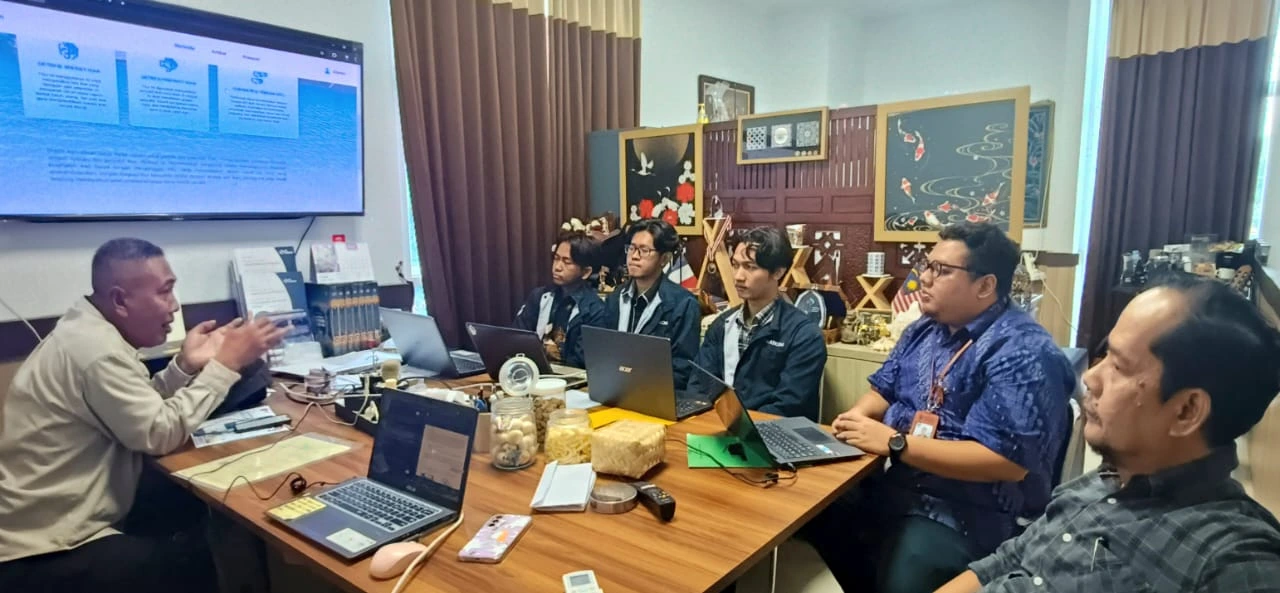
Semarang, tekkom.ft.undip.ac.id – A community service team from the Department of Computer Engineering consisting of seven members, including three Computer Engineering students—Fadlil Ferdiansyah, Irawan Habib Yulianto, and Muhammad Zamrol Imada—and four lecturers—Patricia Evericho Mountaines, Erwin Adriono, Yudi Eko Windarto, and Arseto Satriyo Nugroho—has developed a digital solution to support Indonesia’s aquaculture sector.
This initiative was motivated by the significant potential of Indonesian aquaculture as a contributor to global protein demand, supported by the country’s rich marine biodiversity. However, many fish farmers still face limited access to timely fish health services. In practice, farmers often rely on personal experience or information from the internet when fish health problems occur, which can lead to uncontrolled disease spread and economic losses.
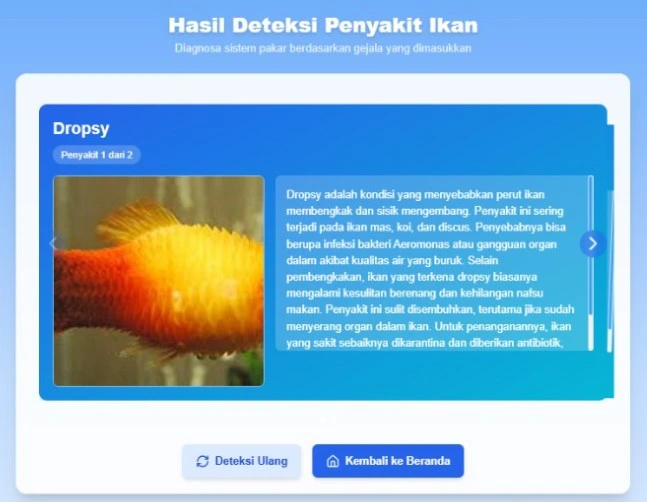
To address this challenge, the team developed a web-based application called Fish Doctor (Dokter Ikan). The application is designed to assist fish farmers in detecting fish species, diagnosing fish diseases, and consulting with fish health experts. Fish Doctor was built using Next.js, Express.js, and MySQL, and integrates computer vision and expert system technologies. Fish species detection is powered by an image-based YOLOv11 model, while disease diagnosis applies a rule-based forward chaining approach, complemented by an online expert consultation module.
Fish Doctor is implemented as a Progressive Web App (PWA) with offline-first capabilities, allowing it to be used in areas with limited internet connectivity. Fish farmers can simply upload a fish photo to identify the species or input observed physical and behavioral symptoms to obtain disease diagnosis results quickly and practically.
Through this application, the team expects Fish Doctor to become an accessible and practical solution for supporting fish health management, enabling early intervention to prevent mass fish mortality and reduce economic losses. This initiative also aligns with SDG 2 (Zero Hunger) and SDG 12 (Responsible Consumption and Production) by promoting sustainable aquaculture practices and reducing dependence on chemical treatments.
Source:
Technology-Based Fish Health Service Innovation for Sustainable Aquaculture Practices in Indonesia, Jurnal SPEKTA, Universitas Ahmad Dahlan.
https://journal2.uad.ac.id/index.php/spekta/article/view/13492